The first Autocorner project brought brands, centres, editorial content and live inventory onto one platform. It gave the team control of its public presence and created a data layer that could connect sources instead of copying them.
That success changed the conversation. Autocorner’s daily work still extends far beyond the website: appointments are arranged by phone, workshop capacity lives in Excel planners, requests arrive through several channels and operational systems differ between automotive groups. The website could attract a customer, but the work that followed still crossed a series of disconnected tools.
Autocorner did not need another isolated admin product. It needed the content platform and the operational reality of the dealership to start speaking to each other.
“What looked like a website opened a much wider range of possibilities. We can now think about transforming internal workflows through integration and automation, while keeping the investment contained.” — Autocorner
Extend the foundation, do not replace it
The current website already does its job well. Next.js renders the public experience, Sanity manages content, AutoScout24 supplies live stock and the typed data layer keeps those systems connected. Rebuilding that foundation would have ignored the value already created.
We chose to extend it with a reactive operational layer. Content remains in Sanity, where editors can shape and publish it. Convex adds the state that changes while work is happening: appointments, form progress, available slots, notifications and the records internal applications need in real time. Standardized connectors form the boundary with DMS, CRM and third-party services.
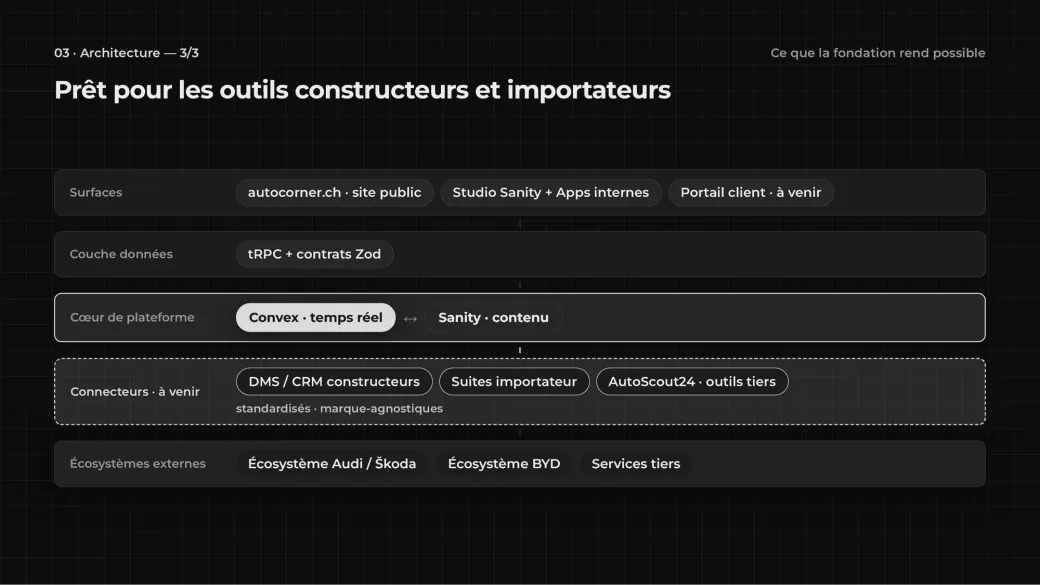
The important choice is not Convex in isolation. It is the separation of responsibilities. Sanity describes what Autocorner offers and how it should be presented. The operational layer knows what is happening now. Connectors translate the systems imposed by each manufacturer into stable contracts the platform understands.
Four modules, paid once and reused
The latest platform plan is deliberately smaller and more practical than a catalogue of future features. It begins with four reusable capabilities:
- Multi-step forms collect only the information required at each point in a journey.
- A slot engine calculates real availability from each centre’s hours, resources and business rules.
- Notifications orchestrate confirmations and reminders, beginning with email and ready to extend to SMS or in-app messages.
- Internal apps give Autocorner’s teams focused tools inside the Sanity environment they already use.
Each capability is built once. A new customer journey then pays for its own rules and screens rather than financing another disposable form, calendar and notification system from scratch.
A reusable module is valuable only when the first real workflow proves it. For Autocorner, that proof is the tyre and wheel appointment.
The first workflow starts with a real workshop constraint
Booking tyres or wheels is not simply choosing a date. A wheel change takes one slot; changing tyres takes two. A check-up can add another. Weekdays and Saturdays use different durations, check-ups are unavailable on certain days, and every centre has its own opening hours and number of lifts.
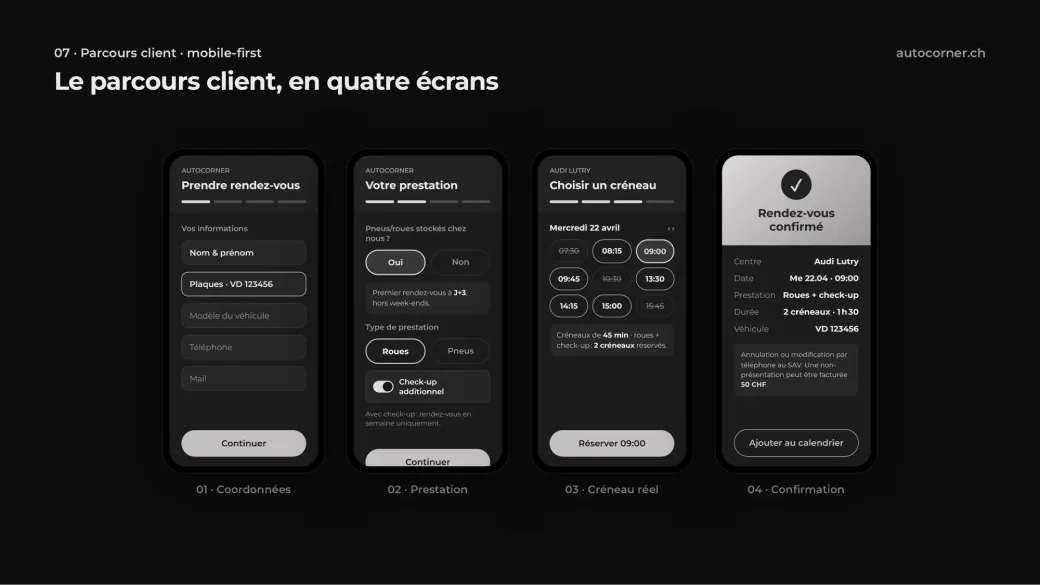
Today, much of that knowledge lives with service advisors and in Excel planners. Customers call, an advisor finds a place, information is entered again and no public view can know the workshop’s real availability.
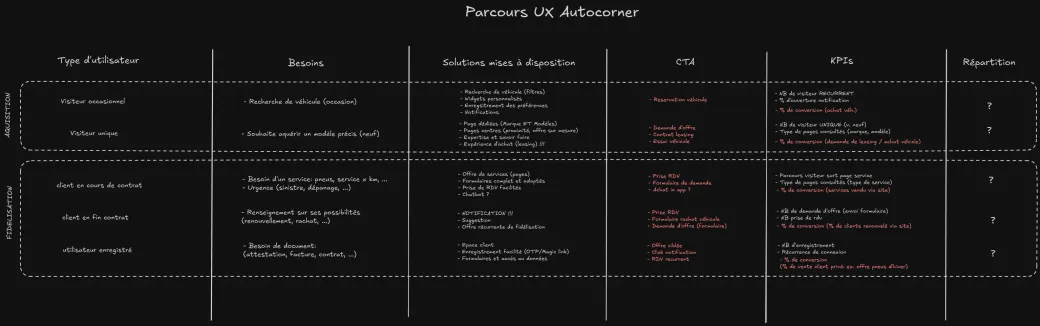
The new journey turns those constraints into explicit rules. A customer enters their details, chooses the service and sees only slots that the selected centre can actually honour. Once confirmed, the reservation appears immediately in the workshop application and the customer receives the appropriate communication. Phone appointments remain possible: an advisor creates them through the same system, so online and offline bookings share one source of truth.
Content management becomes the place where work is shaped
Putting the internal appointment app alongside Sanity is more than a convenient shortcut. The team already uses the Studio to manage brands, centres and services. Those same records contain the context a workflow needs: which centre is concerned, which brand language to use, what service is offered and how the confirmation should look.
The appointment app adds the operational view: day and week calendars, lifts, online reservations, manually created bookings, and import or export for the Excel planning that still supports the transition. Staff keep familiar tools while the platform progressively removes duplicate entry.
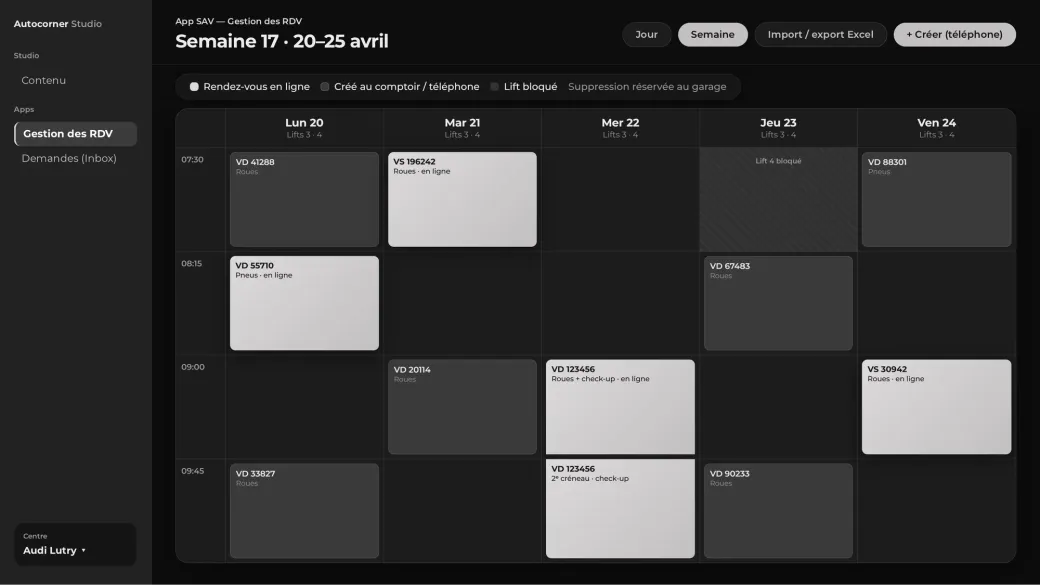
This is where content management and business workflows genuinely meet. Editors shape the journey and its language; operational data moves it from one state to the next; the internal app shows the team what requires action. None of those concerns has to impersonate the other.
Build the foundation once, prove it one workflow at a time
Tyre and wheel booking is intentionally the first proof, not an excuse to launch every possible internal tool at once. It exercises all four modules with a process Autocorner understands well and whose daily impact is easy to observe: fewer phone-only reservations, no double entry between the web and the planner, real availability and a shared view for service advisors.
Once those modules are proven, the same foundation can support service appointments, test drives, trade-in requests, leasing journeys or a customer portal. Manufacturer and importer tools can join through connectors as their interfaces and business value are confirmed. Each next step remains a decision, not a promise hidden inside a grand platform diagram.
That is how we choose technology at Devocracy: not by adding the largest possible stack, but by identifying the reusable part of a real client problem and proving it with a workflow that matters now. Autocorner gets a foundation it can grow without paying for the same capabilities repeatedly—and a first feature that already shows why the foundation exists.